
jeudi 10 octobre 2013
GLOBE ATHON EVENT IN GOMA CITY-AGIR ENSEMBLE
AGIR ENSEMBLE/HOPE MEDICAL CENTER: GLOBE ATHON EVENT IN GOMA
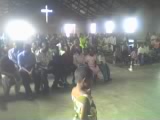
On October 5, 2013 Agir Ensemble has hold the Globe-athon event which consists of a 2 hours meeting with women who brought kids at vaccination at Virunga Health Center and cervical cancer screening for 20 women free of charge at Hope Medical Center.
The objectives of the event were:
1. To gather 40 women for the meeting
2. To get commitment of proceeding to BSE of 90% of attendees
3. To do cervical cancer screening for 20 women free of charge at Hope Medical center.
We have gathered 53 women at Virunga health center and we taught them how to do Breast Self Examination (BSE) for breast cancer early detection.
Almost all women (51) found this information very important for their life and have committed to proceed to the BSE every day and to consult doctor for any change to their breasts.
All attendees (53) committed to leverage the message to their friend.
After this meeting we went to the Hope Medical Center and we got a round table with 10 women before beginning the cervical cancer screening. During this round table we explained to women the relevance of colposcopy to prevent cervical cancer screening and all of them committed to spread the message to their friends.
Then we begun colposcopy and other women arrived progressively during the day and in total we screened 18 women among them: 15 had negative results (83.33%), 1 has LSIL (5.56%) and 2 have HSIL (11.11%).
Indicators of success:
1. Attendees: 53/ 40 expected => 132.5%
2. We have got commitment of 51 women/53 attendees to practice BSE in their life => 96.23%
3. All women who attended the event (100%) committed to leverage the message to their friends.
4. Screened women: 18/20 expected => 90%.
This event was a valuable day to allow us raising awareness of women cancer, especially cervical cancer and breast cancer to let women know what can be done for prevention and early detection.
Done in Goma, October 9, 2013.
Mateus Kambale Sahani, MD
Agir Ensemble/Hope Medical Center.


lundi 3 juin 2013
Colposcopy in DRC, now possible
Agir Ensemble and its medical clinic, Hope Medical Center (HMC) is please to announce to all that it has been able to launch the Colposcopy service this month of May 2013. It is clearly known that cervical cancer is the most common cancer in prevalence and in mortality in D.R.Congo and the second one is breast cancer. For a very long period no colposcopy could be done in Congo and Agir Ensemble took this program in mind as its first priority for women of Congo.
I had assisted to unnecessary deaths by cervical cancer, a fully preventable disease, in many hospitals in the country and no body could stop it happen. No one could imagine that colposcopy could be possible in this country; no one could help women getting access to this service in the country !
But we did it! We have begun this fight against cancer, especially cervical cancer and breast cancer since 2004 (there are now 11 years), a fight for a long period and we went slowly but surely towards our goal to make available prevention and early detection services for cancers. And now colposcopy is possible in D.R. Congo, city of GOMA at the east of the republic. The coloposcopy center was launched on May 2, 2013 and this there we have got 5 women attending the service among them 1 has advanced cervical, 1 has precancer (CIN) and 3 have negative results.
The main challenge we have is that people in our country are not aware of what is colposcopy and what is its relevance, that is why women didn’t begin coming to this service. We have begun awareness campaign for women in the city to increase the number of people who consult for colposcopy. The second challenge is that most of them don’t have possibility of paying for their colposcopy examination and they need a service free of charge. It could be better to begin with a pilot project for a specific number of women and this could let people aware of the service and then they can pay for it while they are aware of its relevance.
Personnaly, I’m very pleased and proud to be the first person to initiate colposcopy in the Democratic Republic of Congo and I’m sure that in the coming days this service will serve also other neighbor countries like Rwanda, Burundi, etc.
I would like to thank greatly the IFCPCP for the training provided to me, especially prof Walter Prendiville, prof Lynnette Denny, Patrick Walker, Fidelma and others. I would like to thank also prof Walter for the donation of the colposcope and other materials.
Many thanks to Mrs. Robin Glazer in New York for her contribution, many thanks also to prof Linus Chuang in New York at Mount Sinai School of Medicine for the additional training in colposcopy and mammography.
The women seen here is the one who has inaugurate our colposcopy service at HOPE MEDICAL CENTER (HMC).
The date of June 1, 2013 will be a historical date for me, for all the team and for our organization because it is the date that we get the first women with positive result on colposcopy (CIN) after examination of 5 women during the month.
Our young service needs sustainability and strength, support, help and donations from evry one to be more effective to help women in the region. We have a long road ahead of us to let women adhere to it and to increase service utilisation indicators for colposcopy.
Done in Goma, June 3, 2013.
Mateus Kambale Sahani, M.D.
Director of Health Department/Agir Ensemble
Medical director of Hope Medical Center (HMC).


mercredi 20 juin 2012
IDEA PROGRAM ACTIVITIES REPORT-ASCO ANNUAL MEETING 2012-CHICAGO & NEW YORK
Agir Ensemble has been honored by the award offered to its director of health department, Dr Mateus Kambale Sahani, by ASCO to cover airfare, accommodation, food, transportation to attend the ASCO Annual Meeting in Chicago and an extension for practical course in New York at Mount Sinai School of Medicine in gynecological oncology.
There were 24 IDEA recipients from different countries among which 1 francophone country, Democratic Republic of Congo, represented by, Dr Mateus of Agir Ensemble.
On Mai 31, 2012, all IDEA (International Development and Education Award) recipients had a visit tour of a cancer center in Chicago, the Northwestern University cancer centre and after the visit scientific presentations were scheduled by staffs of ASCO and of the Northwestern Hospital.
ASCO Annual Meeting is the first great and fabulous conference in the world and there were a lot of things to learn in each aspect of clinical oncology.
Among the 24 recipients, 20 were for IDEA program and 4 for IDEA-Palliative care program. The selection was very competitive and only the best could be selected. For IDEA program, 100 applications were submitted and only 20 were selected.
We have to note that Dr Mateus is the first from Democratic Republic of Congo to receive this award and has been honored accordingly at the award ceremony at the meeting and mentored by Prof Dr Linus Chuang and Dr David Fishman of Mount Sinai School of Medicine of New York.
This award allows recipients to remain in permanent contact with their mentors and develop a long friendship and their career in oncology. This to say it is just a beginning and many things are coming in the future.
Career development in this field, especially in our country needs efforts from every one, stakeholders and political commitments.
Many topics have been developed at the conference among them how to disseminate skills gained and how to improve program in the respective countries.
At the end of the ASCO Annual Meeting on June 5, 2012 every IDEA recipient went to the chosen site for ETA (Extended Tour Award) in different cities of USA. Dr Mateus has been placed in New York for 3 days of practical courses from June 6-9, 2012. A lot of things have been learnt and it can be useful for people in Democratic Republic of Congo. I got many skills in mammography (how it is performed and how to read the results), I’ve assisted to 2 cases of radical hysterectomy under laparoscopy and many cases of colposcopy. This is a lot to help people in DRC but assistance is really needed to allow us setting this program.
Fifteen countries from every where in the world represented by 24 oncologists have attended the IDEA and IDEA-PC program activities.
The delegates were from the following countries:
1. Nepal: 2 delegates
2. Georgia: 1 delegate
3. Honduras: 1 delegate
4. Russia: 2 delegates
5. Jordan: 1 delegate
6. India: 5 delegates
7. Argentina: 1 delegates
8. China: 2 delegates
9. Pakistan: 1 delegate
10. Brazil: 1 delegate
11. Nigeria: 3 delegates
12. D.R.Congo: 1 delegate
13. Kenya: 1 delegate
14. Zambia: 1 delegate
15. Egypt: 1 delegate
Done in Goma, June 20, 2012.
Mateus Kambale Sahani, M.D.
Agir Ensemble/Goma-D.R.Congo,
Tel: +243-998625635/+250-788884503, Email: kambalesahani@yahoo.fr or agirense@yahoo.fr, Blog: http://agirensemblerdc.blogspot.com


samedi 12 mai 2012
Partnership Agir Ensemble, D.R.Congo and Solutions4Health, UK
Partnership Agir Ensemble, D.R.Congo and Solutions4Health, UK
Agir Ensemble is a NGO based in the city of Goma, Democratic Republic of Congo which is involved in cancer control and tobacco control since 2004. It is member of UICC, ALIAM, partner with AORTIC, member of FCA, ATCA and has realized a lot of actions against tobacco, cancer, palliative care. We have demonstrated an international involvement in the fight against NCDs.
During the Afro WHO consultation meeting in Brazzaville April 4-6, 2011, Agir Ensemble has given a delegate as a representative of UICC to discuss the declaration that was adopted at the UN High level summit in September 2011 in New York.
Agir Ensemble has been represented by its director of Health Department at the 15th World Conference on Tobacco Or Health in Singapore from March 20-24, 2012 and before the conference, we have been in contact with Solutions4Health of UK to build a partnership in smoking cessation with our medical clinic to help people in D.R.Congo have access to tobacco control service with technical support from Solutions4Health.
During the conference, we met with delegates from Solutions4Health to see how we can improve our partnership and setup strategies to look for funding for our health link. So, THET program was one of opportunities to strengthen our link.
Mateus Kambale Sahani, M.D.
Director of Health Department
Agir Ensemble.


mardi 24 avril 2012
Singapore Conference (15th WCTOH) urges UN, Governments to incorporate tobacco Control in Development Agenda, MDGs


Singapore Conference (15th WCTOH) urges UN, Governments to incorporate tobacco Control in Development Agenda, MDGs
Delegates from across the globe that participated at the 15th World Conference on Tobacco or Health (15th WCTOH) which was held March 20-24, 2012 in Singapore have called on the United Nations and national governments to incorporate tobacco control into the development agenda at national and global levels and at the next round of the Millennium Development Goals (MDGs).
In the declaration at the end of the convergence, delegates reaffirmed that the tobacco industry continues to develop new tobacco products and obstruct effective tobacco control measures and demanded that tobacco should be incorporated in future UN development indicators and the UN Development Assistance Framework (UNDAF).
They recognised that tobacco use is the leading preventable risk factor for non-communicable diseases and that all forms of tobacco products (including new and emerging tobacco products) and their by-products are harmful and noted that to improve the quality of life, enhance human development, and reduce the social, environmental, economic, and healthcare burdens of countries, the global tobacco control community must increase the scope and intensity of tobacco control efforts.
A comprehensive collaboration and coordination at the global, regional, and national levels between tobacco control communities as well as sectors outside health were recommended as essential to move tobacco control efforts forward.
They reaffirmed that the WHO Framework Convention on Tobacco Control (FCTC) is an effective and cost-effective tool for tobacco control and recommend that by 2015 all new bilateral and multilateral agreements and treaties should have a clause that allows governments to take any measures necessary to protect human life or health, provided that such measures are not used for trade protectionist purposes.
National governments were urged to incorporate tobacco control as a core item in country-level NCDs national plans, while partners (academics, NGOs, government’s agencies) are urged to initiate a study on the economic effects of tobacco.
Specific recommendations were also made on Articles 7 to 12 of the WHO FCTC. On Article 5.3, delegates recommended that by incorporating tobacco in development initiatives, by 2025 all parties will have adopted measures to address tobacco industry interference in public health policies.
Many things should be done by governments if they are really responsible and have commitment to protect their population but commitments and willing of donors and partners are very important to move forward all efforts done by tobacco control activists and advocates. Things to be done are very well known but there is lack of financial support for activists and local NGO. Apart of the Bloomberg Initiative Fund, no other donors are committed to fund tobacco control efforts. This is a big challenge to be solved.
Even the Bloomberg fund is not used equitably for all countries; only a small number of countries benefit of this fund. This is a second challenge to be solved.
Thanks for your attention.
Goma, April 24th, 2012.
Mateus Kambale Sahani, M.D.
Agir Ensemble/Goma-DRC.
dimanche 22 avril 2012
RETINOBLASTOMA-EYE CANCER


RETINOBLASTOMA-EYE CANCER
1. What is retinoblastoma?
Retinoblastoma is a cancer of one or both eyes which occurs in young children. There are approximately 350 new diagnosed cases per year in the United States. Retinoblastoma affects one in every 15,000 to 30,000 live babies that are born in the United States. Retinoblastoma affects children of all races and both boys and girls.
The retinoblastoma tumor(s) originate in the retina, the light sensitive layer of the eye which enables the eye to see. When the tumors are present in one eye, it is referred to as unilateral retinoblastoma, and when it occurs in both eyes it is referred to as bilateral retinoblastoma. Most cases (75%) involve only one eye (unilateral); the rest (25%) affect both eyes (bilateral). The majority (90%) of retinoblastoma patients have no family history of the disease; only a small percentage of newly diagnosed patients have other family members with retinoblastoma (10%).
2. Signs and symptoms
Retinoblastoma can present in a variety of ways. The majority of retinoblastoma patients present with a white pupil reflex or leukocoria instead of a normal healthy black pupil or red reflex similar to the one seen when photographs are taken of a child looking directly into the camera. This abnormal white pupillary reflex is sometimes referred to as a cat's eye reflex.
Many times the parent is the first one to notice the cat's eye reflex. Other eye diseases can also present with this white pupillary reflex; leukocoria does not always indicate retinoblastoma. An ophthalmologist can determine the correct diagnosis.
A crossed eye or strabismus is the second most common manner in which retinoblastoma presents. The child's eye may turn out (towards the ear), called exotropia, or turn in (towards the nose), called esotropia.
Retinoblastoma may also present with a red, painful eye, poor vision, inflammation of tissue surrounding the eye, an enlarged or dilated pupil, different colored irides (heterochromia), failure to thrive (trouble eating or drinking), extra fingers or toes, malformed ears, or retardation. On rare occasions, retinoblastoma is discovered on a well-baby examination. Most often, the symptoms of retinoblastoma are first detected by a parent.
When there is a family history of retinoblastoma, newborn babies should be examined in the nursery at birth by an ophthalmologist, or an eye doctor. When there is no family history, it is frequently the parents who notice leukocoria or strabismus and bring their child in for an examination. Often the general ophthalmologist refers the child to an ophthalmologist who specializes in children with retinoblastoma and other cancer of the eye.
The ophthalmic examination by the specialist is best done under general anesthesia. Some very young and older patients can be examined without general anesthesia; this decision is made by the ophthalmologist. When the examination is performed without general anesthesia, the child is placed on his or her back and is wrapped in a sheet like a mummy to restrict the movement of the child's arms and legs. Dilating drops (which sting for approximately 30 seconds after they are placed in the eye) are placed into both eyes prior to the examination. These drops dilate the pupils of the eyes and allow the ophthalmologist to view the retina. Sometimes numbing drops are also placed in both eyes to numb the surface.
If the child is to be examined under anesthesia, the anesthesiologist will put him or her to sleep by placing a mask over his or her mouth or nose. A tube may also be placed in the child's throat to aid breathing and an intravenous line may be started. In order to minimize the risks of anesthesia, the anesthesiologist will ask that the child not be given food or fluids for several hours before the examination. The child will usually fall asleep within a few minutes and the parent may stay until the child is anesthetized. If you have any doubts or questions about whether your child should have anesthesia, you should ask your ophthalmologist, anesthesiologist or nurse.
3. Long term complication of Retinoblastoma.
The majority of children in the United States (over 95%) survive the cancer and have perfectly normal lives. All the children with unilateral retinoblastoma have one normal eye whose sight is not affected even though they may have had one eye removed. Children with one eye have normal vision, play sports, and later drive cars. It is, however, especially important for children with vision in only one eye to wear protective eyewear during sports and other hazardous activities. These children grow up and become famous actors, physicians, lawyers, nurses, accountants, and parents themselves.
The majority of children with bilateral retinoblastoma retain at least one eye with good vision and many are able to retain the use of both eyes. They also live normal lives, go to school, enjoy life, have careers and have families themselves. However, all children with bilateral disease and the 15% of unilateral patients who have the familial form of retinoblastoma will be at much higher risk for other cancers not involving the eyes throughout their lives. Five years after the initial diagnosis of retinoblastoma, more children with the genetic form of retinoblastoma have died from these second tumors than from the original retinoblastoma. The most common second tumors are osteogenic sarcoma, a cancerous tumor which affects the bones, soft tissue sarcomas, and cutaneous melanomas (tumors of the skin, muscle and connective tissue). Although the reported incidences of these tumors vary widely, the risk appears to be about 1% a year. This risk is also increased by the use of external beam radiation, although the amount of increase depends on the age at which the child was treated.
Follow-up appointments are very important when a child is diagnosed with retinoblastoma. All children should be followed by an ophthalmologist and by a pediatric oncologist. Frequency of examinations depends upon the age of the child, the ophthalmologist's suspicion of new tumors, the involvement of one or both eyes, and the type of treatment that the child has received. Mothers and fathers are encouraged to talk to the nurse and to call with questions between visits.
Many parents meet other parents in the waiting room of the physician’s office, clinic, or hospital who also have children with retinoblastoma. Some have found it very helpful to talk to other parents who share similar concerns. Some institutions have newsletters or formal support groups for parents of children with retinoblastoma. Finally, some institutions have programs which can make a child's return to school, home, and the community a bit easier.
Retinoblastoma is a life-threatening disease, but it is rarely a fatal one if treated appropriately. With the correct treatment in the hands of an experienced ophthalmologist and appropriate follow-up both for eyes and for other cancers, the retinoblastoma patient has a very good chance of living a long, full, and happy life.
4. Clinical case: a kid of 8 year old Congolese (DRC) living in Goma has leukocoria and strabismus, eye pruritis since 2006. He has been operated 3 times for cataracts and capsular fibrosis as it was diagnosed by doctors in 3 different hospitals but till there the symptoms remain and he continues having the same signs. See pictures in this document. We suspect Retinoblastoma for this kid and we can’t find appropriate treatment for him in the country. He needs support and every one who knows to help him can contact the NGO Agir Ensemble at agirense@yahoo.fr and a referral to St Jude Hospital could be better for him.
5. References
Bramson DH. Pediatric Emergency Casebook: Retinoblastoma. New York: Burroughs-Wellcome, 1985. pp 3-13.
Abramson DH. Retinoblastoma: diagnosis and management. CA: A Cancer Journal for Clinicians 1982. Volume 32, pp 130-142
Abramson DH. The diagnosis of retinoblastoma. Bull NY Acad Med 1988. Volume 64, pp 283-317.
Abramson DH, Ellsworth RM. Ancillary tests for the diagnosis of retinoblastoma. Bull NY Acad Med 1980. Volume 56, pp 221-231.
Abramson DH, Ellsworth RM, Kitchin FD, Tung G. Second monocular tumors in retinoblastoma survivors: are they radiation induced? Ophthalmology 1984. Volume 91, pp 1351-1355.
Abramson DH, Dunkel I, McCormick BM. Neoplasms of the Eye, in Cancer Medicine, 4th ed. Williams & Wilkins, Holland, 1996. pp 1517-1536.
Abramson DH, Servodidio CA. Retinoblastoma in the first year of life. Ophthalmic Paediatric Genetics 1992. Volume 13, pp 191-203.
Char DH, Hedges TR 3rd, Norman D. Retinoblastoma CT diagnosis. Ophthalmology 1984. Volume 91, pp 1347-1350.
Donaldson SS, Egbert PR. Retinoblastoma. In: Pizzo PA, Poplack DG. Principles and Practice of Pediatric Oncology. Philadelphia, PA: Lippincott, 1989. pp555-568.
Dryja, TP. Assessment of risk in hereditary retinoblastoma. In: Albert DA and Jakobiec FA. Principles and Practice of Ophthalmology. Philadelphia, PA: WB Saunders Co. 1996. Volume 5, pp 3270-3279.
Gallie BL, Dunn JM, Hamel PA, et al. How do retinoblastoma tumors form? Eye 1992. Volume 6, pp. 226-231.
Grabowski E, Abramson DH. Retinoblastoma in Clinical Pediatric Oncology, 4th ed. Fernbach DJ and Vietti TJ, ed. 1991. Mosby Books, pp 427-436.
Done in Goma, April 22, 2012.
Mateus Kambale Sahani, M.D.
Agir Ensemble/Goma-DRC.
jeudi 19 avril 2012
NCDs in developing country: urgent action is needed.


Leading Cancer Organizations Highlight Consultations on Noncommunicable Diseases
His Excellence Health Minister Makweng Kaput
There are two critical consultations with a 19th April submission deadline this week and a series of consultations with Member States in the next two months which will shape and impact on establishing cancer and NCDs as a global priority.
• Options for strengthening and facilitating multisectoral action for the prevention and control of NCDs through partnership http://www.who.int/nmh/events/2012/consultation_march_2012/en/index.html
• A comprehensive global monitoring framework, including indicators, and a set of voluntary global targets for the prevention and control of NCDs http://www.who.int/nmh/events/2012/consultation_april_2012/en/index.html
We are members of UICC and NCD Alliance and enclose the responses to the above for your information and comment, which we fully support.
We encourage you to engage and submit a response by the 19th of April as well as prepare for the upcoming consultation of Members States on 26th April in Geneva and the World Health Assembly (WHA), which will take place from May 21st to May 26th 2012 also in Geneva.
Multisectorial action for prevention and control of NCDs through partnership
NCD Alliance has prepared a comprehensive response to the options proposed in the discussion paper and propose a comprehensive but phased approach headed by a multisectoral coordinating platform with UN interagency. We welcome an opportunity to discuss your views on these proposals.
Comprehensive global monitoring framework, indicators and targets for the prevention and control of NCDs
In line with the commitments made by Member States in the United Nations Political Declaration on NCDs, NCDA and UICC strongly supports the broader range of indicators for NCD surveillance proposed in the WHO proposal dated 22nd March 2012, including:
Collection of data on cancer incidence and type (incl. stage where appropriate)
Addition of a proposed target on physical activity
Vaccination against infectious cancers: Human Papillomavirus (HPV) and Hepatitis B virus.
Monitoring the prevalence of women between ages 30-49 screened for cervical cancer at least once.
Access to palliative care and pain relief medications.
We urge you to support this position and ensure that these indicators are retained during Member State negotiations.
I want you to know that cervical cancer is killing women in DRC. It is the killer no1 by cancer in our country; a preventable disease and nothing is done by now.
Please be aware that people in Democratic Republic of Congo, are dying by cancer without any assistance and even preventable cancers like cervical and breast cancers. We know what to do, we have the solution in mind but we don't have money to settle a strong program of cancer prevention. You can't imagine the emotion we have when we see people dying in front of us by a disease that we could prevent and we don't see it coming in the close future!!! Health care professionals have become powerless in front a cancer case. No chemotherapy available, no radiotherapy, no palliative care service and no prevention!! DRC is a big country in Africa with more than 70 millions of people among them 60% are women and no women has access to cervical cancer screening, breast cancer screening,...!! So, where is the money to fight cancer and other NCDs in DRC? Even if we are not paying now, we will pay for ever if nothing is done today.
Our organization, AGIR ENSEMBLE, member of UICC have realize a lot of progress in cervical cancer prevention: 25 health professionals (6 doctors and 19 nurses) have been trained in cervical cancer screening and HPV vaccination in the city of Goma, a guideline for sensitization on screening is available, a training book is available and survey report on level of adhere and understanding of women of cervical cancer screening program is available too. The country, Democratic Republic of Congo, have gained an international recognized colposcopist trained by IFCPC (International Federation on Cervical Pathologies and Colposcopy) in conjunction with Cape Town University/South Africa since January 2012 (Dr Mateus Kambale Sahani) but we don't have equipment to begin a colposcopy service to prevent cervical cancer and other cervical diseases. This is a great gain but is not used for the benefit of our population because of missing committed funders for the service to be available. We miss real leaders and committed funders to address and fight NCDs in developing countries. The time to act is now.
However, there remain some areas where the set of proposed targets fails to match the ambitions and the scope of the Political Declaration and we urge you to consider our recommendations and request an appointment to discuss these with you in more detail.
As the leading voluntary Democratic Republic of Congo-based organization addressing cancer and NCDs, we urge Democratic Republic of Congo to take a strong leadership role in this process of translating commitments into action. Please
• Recognise prior commitments made in the UN Political Declaration
Dramatically reduced set of global voluntary targets fail to match the ambitions and scope of the political declaration
The ability to measure simple outcomes for breast cancer – the most common cancer in women in all resource settings – should not be overlooked and we call for indicators in saturated fats and added sugar
• Stand up for the rights of people living with cancer and other NCDs now
Include a target to achieve a minimum of 80% availability of affordable, quality-assured essential NCD medicines and technologies in public and private sectors.
• Demonstrate leadership at the World Health Assembly in May
Reporting every five years is simply not frequent enough to keep attention adequately focused on NCDs. Agree to reporting progress every two years. This can be done and will elevate NCDs to the appropriate level of priority on national and global agendas.
Resolve to adopt the target to reduce preventable deaths from NCDs by 25% by 2025 in May as the central goal of the next global plan on NCDs.
With kind regards
Mateus Kambale Sahani, M.D
AGIR ENSEMBLE/Goma-DRC
Inscription à :
Articles (Atom)


 Articles