2012 ASCO Annual Meeting-Chicago/USA

2012 ASCO Annual Meeting-Chicago/USA
Award IDEA recipients and the chairman of IDEA program, ASCO

dimanche 22 avril 2012

RETINOBLASTOMA-EYE CANCER


RETINOBLASTOMA-EYE CANCER
1. What is retinoblastoma?
Retinoblastoma is a cancer of one or both eyes which occurs in young children. There are approximately 350 new diagnosed cases per year in the United States. Retinoblastoma affects one in every 15,000 to 30,000 live babies that are born in the United States. Retinoblastoma affects children of all races and both boys and girls.
The retinoblastoma tumor(s) originate in the retina, the light sensitive layer of the eye which enables the eye to see. When the tumors are present in one eye, it is referred to as unilateral retinoblastoma, and when it occurs in both eyes it is referred to as bilateral retinoblastoma. Most cases (75%) involve only one eye (unilateral); the rest (25%) affect both eyes (bilateral). The majority (90%) of retinoblastoma patients have no family history of the disease; only a small percentage of newly diagnosed patients have other family members with retinoblastoma (10%).
2. Signs and symptoms
Retinoblastoma can present in a variety of ways. The majority of retinoblastoma patients present with a white pupil reflex or leukocoria instead of a normal healthy black pupil or red reflex similar to the one seen when photographs are taken of a child looking directly into the camera. This abnormal white pupillary reflex is sometimes referred to as a cat's eye reflex.
Many times the parent is the first one to notice the cat's eye reflex. Other eye diseases can also present with this white pupillary reflex; leukocoria does not always indicate retinoblastoma. An ophthalmologist can determine the correct diagnosis.
A crossed eye or strabismus is the second most common manner in which retinoblastoma presents. The child's eye may turn out (towards the ear), called exotropia, or turn in (towards the nose), called esotropia.
Retinoblastoma may also present with a red, painful eye, poor vision, inflammation of tissue surrounding the eye, an enlarged or dilated pupil, different colored irides (heterochromia), failure to thrive (trouble eating or drinking), extra fingers or toes, malformed ears, or retardation. On rare occasions, retinoblastoma is discovered on a well-baby examination. Most often, the symptoms of retinoblastoma are first detected by a parent.
When there is a family history of retinoblastoma, newborn babies should be examined in the nursery at birth by an ophthalmologist, or an eye doctor. When there is no family history, it is frequently the parents who notice leukocoria or strabismus and bring their child in for an examination. Often the general ophthalmologist refers the child to an ophthalmologist who specializes in children with retinoblastoma and other cancer of the eye.
The ophthalmic examination by the specialist is best done under general anesthesia. Some very young and older patients can be examined without general anesthesia; this decision is made by the ophthalmologist. When the examination is performed without general anesthesia, the child is placed on his or her back and is wrapped in a sheet like a mummy to restrict the movement of the child's arms and legs. Dilating drops (which sting for approximately 30 seconds after they are placed in the eye) are placed into both eyes prior to the examination. These drops dilate the pupils of the eyes and allow the ophthalmologist to view the retina. Sometimes numbing drops are also placed in both eyes to numb the surface.
If the child is to be examined under anesthesia, the anesthesiologist will put him or her to sleep by placing a mask over his or her mouth or nose. A tube may also be placed in the child's throat to aid breathing and an intravenous line may be started. In order to minimize the risks of anesthesia, the anesthesiologist will ask that the child not be given food or fluids for several hours before the examination. The child will usually fall asleep within a few minutes and the parent may stay until the child is anesthetized. If you have any doubts or questions about whether your child should have anesthesia, you should ask your ophthalmologist, anesthesiologist or nurse.

3. Long term complication of Retinoblastoma.


The majority of children in the United States (over 95%) survive the cancer and have perfectly normal lives. All the children with unilateral retinoblastoma have one normal eye whose sight is not affected even though they may have had one eye removed. Children with one eye have normal vision, play sports, and later drive cars. It is, however, especially important for children with vision in only one eye to wear protective eyewear during sports and other hazardous activities. These children grow up and become famous actors, physicians, lawyers, nurses, accountants, and parents themselves.
The majority of children with bilateral retinoblastoma retain at least one eye with good vision and many are able to retain the use of both eyes. They also live normal lives, go to school, enjoy life, have careers and have families themselves. However, all children with bilateral disease and the 15% of unilateral patients who have the familial form of retinoblastoma will be at much higher risk for other cancers not involving the eyes throughout their lives. Five years after the initial diagnosis of retinoblastoma, more children with the genetic form of retinoblastoma have died from these second tumors than from the original retinoblastoma. The most common second tumors are osteogenic sarcoma, a cancerous tumor which affects the bones, soft tissue sarcomas, and cutaneous melanomas (tumors of the skin, muscle and connective tissue). Although the reported incidences of these tumors vary widely, the risk appears to be about 1% a year. This risk is also increased by the use of external beam radiation, although the amount of increase depends on the age at which the child was treated.
Follow-up appointments are very important when a child is diagnosed with retinoblastoma. All children should be followed by an ophthalmologist and by a pediatric oncologist. Frequency of examinations depends upon the age of the child, the ophthalmologist's suspicion of new tumors, the involvement of one or both eyes, and the type of treatment that the child has received. Mothers and fathers are encouraged to talk to the nurse and to call with questions between visits.
Many parents meet other parents in the waiting room of the physician’s office, clinic, or hospital who also have children with retinoblastoma. Some have found it very helpful to talk to other parents who share similar concerns. Some institutions have newsletters or formal support groups for parents of children with retinoblastoma. Finally, some institutions have programs which can make a child's return to school, home, and the community a bit easier.
Retinoblastoma is a life-threatening disease, but it is rarely a fatal one if treated appropriately. With the correct treatment in the hands of an experienced ophthalmologist and appropriate follow-up both for eyes and for other cancers, the retinoblastoma patient has a very good chance of living a long, full, and happy life.
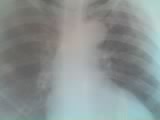
4. Clinical case: a kid of 8 year old Congolese (DRC) living in Goma has leukocoria and strabismus, eye pruritis since 2006. He has been operated 3 times for cataracts and capsular fibrosis as it was diagnosed by doctors in 3 different hospitals but till there the symptoms remain and he continues having the same signs. See pictures in this document. We suspect Retinoblastoma for this kid and we can’t find appropriate treatment for him in the country. He needs support and every one who knows to help him can contact the NGO Agir Ensemble at agirense@yahoo.fr and a referral to St Jude Hospital could be better for him.

5. References
Bramson DH. Pediatric Emergency Casebook: Retinoblastoma. New York: Burroughs-Wellcome, 1985. pp 3-13.
Abramson DH. Retinoblastoma: diagnosis and management. CA: A Cancer Journal for Clinicians 1982. Volume 32, pp 130-142
Abramson DH. The diagnosis of retinoblastoma. Bull NY Acad Med 1988. Volume 64, pp 283-317.
Abramson DH, Ellsworth RM. Ancillary tests for the diagnosis of retinoblastoma. Bull NY Acad Med 1980. Volume 56, pp 221-231.
Abramson DH, Ellsworth RM, Kitchin FD, Tung G. Second monocular tumors in retinoblastoma survivors: are they radiation induced? Ophthalmology 1984. Volume 91, pp 1351-1355.
Abramson DH, Dunkel I, McCormick BM. Neoplasms of the Eye, in Cancer Medicine, 4th ed. Williams & Wilkins, Holland, 1996. pp 1517-1536.
Abramson DH, Servodidio CA. Retinoblastoma in the first year of life. Ophthalmic Paediatric Genetics 1992. Volume 13, pp 191-203.
Char DH, Hedges TR 3rd, Norman D. Retinoblastoma CT diagnosis. Ophthalmology 1984. Volume 91, pp 1347-1350.
Donaldson SS, Egbert PR. Retinoblastoma. In: Pizzo PA, Poplack DG. Principles and Practice of Pediatric Oncology. Philadelphia, PA: Lippincott, 1989. pp555-568.
Dryja, TP. Assessment of risk in hereditary retinoblastoma. In: Albert DA and Jakobiec FA. Principles and Practice of Ophthalmology. Philadelphia, PA: WB Saunders Co. 1996. Volume 5, pp 3270-3279.
Gallie BL, Dunn JM, Hamel PA, et al. How do retinoblastoma tumors form? Eye 1992. Volume 6, pp. 226-231.
Grabowski E, Abramson DH. Retinoblastoma in Clinical Pediatric Oncology, 4th ed. Fernbach DJ and Vietti TJ, ed. 1991. Mosby Books, pp 427-436.
Done in Goma, April 22, 2012.
Mateus Kambale Sahani, M.D.
Agir Ensemble/Goma-DRC.

jeudi 19 avril 2012

NCDs in developing country: urgent action is needed.


Leading Cancer Organizations Highlight Consultations on Noncommunicable Diseases
His Excellence Health Minister Makweng Kaput
There are two critical consultations with a 19th April submission deadline this week and a series of consultations with Member States in the next two months which will shape and impact on establishing cancer and NCDs as a global priority.
• Options for strengthening and facilitating multisectoral action for the prevention and control of NCDs through partnership http://www.who.int/nmh/events/2012/consultation_march_2012/en/index.html

• A comprehensive global monitoring framework, including indicators, and a set of voluntary global targets for the prevention and control of NCDs http://www.who.int/nmh/events/2012/consultation_april_2012/en/index.html
We are members of UICC and NCD Alliance and enclose the responses to the above for your information and comment, which we fully support.
 We encourage you to engage and submit a response by the 19th of April as well as prepare for the upcoming consultation of Members States on 26th April in Geneva and the World Health Assembly (WHA), which will take place from May 21st to May 26th 2012 also in Geneva.
Multisectorial action for prevention and control of NCDs through partnership
NCD Alliance has prepared a comprehensive response to the options proposed in the discussion paper and propose a comprehensive but phased approach headed by a multisectoral coordinating platform with UN interagency. We welcome an opportunity to discuss your views on these proposals.
Comprehensive global monitoring framework, indicators and targets for the prevention and control of NCDs
In line with the commitments made by Member States in the United Nations Political Declaration on NCDs, NCDA and UICC strongly supports the broader range of indicators for NCD surveillance proposed in the WHO proposal dated 22nd March 2012, including:
 Collection of data on cancer incidence and type (incl. stage where appropriate)
 Addition of a proposed target on physical activity
 Vaccination against infectious cancers: Human Papillomavirus (HPV) and Hepatitis B virus.
 Monitoring the prevalence of women between ages 30-49 screened for cervical cancer at least once.
 Access to palliative care and pain relief medications.
We urge you to support this position and ensure that these indicators are retained during Member State negotiations.
I want you to know that cervical cancer is killing women in DRC. It is the killer no1 by cancer in our country; a preventable disease and nothing is done by now.
Please be aware that people in Democratic Republic of Congo, are dying by cancer without any assistance and even preventable cancers like cervical and breast cancers. We know what to do, we have the solution in mind but we don't have money to settle a strong program of cancer prevention. You can't imagine the emotion we have when we see people dying in front of us by a disease that we could prevent and we don't see it coming in the close future!!! Health care professionals have become powerless in front a cancer case. No chemotherapy available, no radiotherapy, no palliative care service and no prevention!! DRC is a big country in Africa with more than 70 millions of people among them 60% are women and no women has access to cervical cancer screening, breast cancer screening,...!! So, where is the money to fight cancer and other NCDs in DRC? Even if we are not paying now, we will pay for ever if nothing is done today.
Our organization, AGIR ENSEMBLE, member of UICC have realize a lot of progress in cervical cancer prevention: 25 health professionals (6 doctors and 19 nurses) have been trained in cervical cancer screening and HPV vaccination in the city of Goma, a guideline for sensitization on screening is available, a training book is available and survey report on level of adhere and understanding of women of cervical cancer screening program is available too. The country, Democratic Republic of Congo, have gained an international recognized colposcopist trained by IFCPC (International Federation on Cervical Pathologies and Colposcopy) in conjunction with Cape Town University/South Africa since January 2012 (Dr Mateus Kambale Sahani) but we don't have equipment to begin a colposcopy service to prevent cervical cancer and other cervical diseases. This is a great gain but is not used for the benefit of our population because of missing committed funders for the service to be available. We miss real leaders and committed funders to address and fight NCDs in developing countries. The time to act is now.
However, there remain some areas where the set of proposed targets fails to match the ambitions and the scope of the Political Declaration and we urge you to consider our recommendations and request an appointment to discuss these with you in more detail.
As the leading voluntary Democratic Republic of Congo-based organization addressing cancer and NCDs, we urge Democratic Republic of Congo to take a strong leadership role in this process of translating commitments into action. Please
• Recognise prior commitments made in the UN Political Declaration
 Dramatically reduced set of global voluntary targets fail to match the ambitions and scope of the political declaration
 The ability to measure simple outcomes for breast cancer – the most common cancer in women in all resource settings – should not be overlooked and we call for indicators in saturated fats and added sugar
• Stand up for the rights of people living with cancer and other NCDs now
 Include a target to achieve a minimum of 80% availability of affordable, quality-assured essential NCD medicines and technologies in public and private sectors.
• Demonstrate leadership at the World Health Assembly in May
 Reporting every five years is simply not frequent enough to keep attention adequately focused on NCDs. Agree to reporting progress every two years. This can be done and will elevate NCDs to the appropriate level of priority on national and global agendas.
 Resolve to adopt the target to reduce preventable deaths from NCDs by 25% by 2025 in May as the central goal of the next global plan on NCDs.
With kind regards
Mateus Kambale Sahani, M.D
AGIR ENSEMBLE/Goma-DRC

mardi 10 avril 2012

SMOKING TOBACCO IN PEOPLE LIVING WITH HIV (PLWH) IN GOMA/DRC


Authors:
Mateus Kambale Sahani1, P. N. Kikuhe2, M.M. Mutumwa3
Affiliation(s):
1AGIR ENSEMBLE, NGO, Health Department, GOMA, Congo, the Democratic Republic of the, 2 Kahembe Health Center,
GOMA, Congo, the Democratic Republic of the, 3 HIV Infection management, Centre Hospitalier de Mugunga, GOMA,
Congo, the Democratic Republic of the,

1. Background
Knowing that Tobacco is a big health issue, our study aimed to analyze the impact of tobacco in people living with HIV
(PLWH),degree of ARV side effects for smokers and non smokers, the relevance of literacy on tobacco as health
problem on the attitude of PLWH regarding tobacco use. Hypothesis: among PLWH, smokers have more health
problems than non smokers; they have low immunity defense than non smokers, PLWH can quit rapidly smoking if
well informed that smoking is more dangerous for them than others.

2. Methods
Retrospective and prospective study realized at GOMA/DRC. Target: PLWH. Retrospective: data collection was done
from files of sicks registered in the program of 2 sites of screening and treatment of HIV. Each site has 650 people
registered. Sample: 200 PLWH constituted by aleatory (random) method taking 2 people among 13 with interval of 6
after the first choice. Prospective: to determine the attitude of PLWH regarding tobacco: the information they have
on the bad effect of tobacco and their commitment to quit when informed. Results were tested by a statistic test:
“The test of comparison of two proportions”.
Sample size has been determined using EPI-INFO setup calculation. We have used EPI-INFO setup for analysis of data.

3. Results
Sample of 200 PLWH: 125 females and 75males. Smokers: 90(45%) Non smokers: 110(55%).Among 90 smokers: 56
males (62.2%) and 34 females (37.8%)
Among PLWH, smokers have more risk of decreasing immunity than non smokers; p=0.024420, Ch2=5.06.
Among PLWH, smokers have more risk to develop chronic lung diseases than non smokers, p=0.000000, Chi2=54.75.
PLWH who smoke develop more oral infections than people who don't smoke; p=0.016312, Chi2=5.77.
Side effects of ARVs are increased for smokers than non smokers; p=0.001195, Chi2=10.50.
PLWH who smoke have more risk to develop tumoral diseases than PLWH who don't smoke; p=0.000044,
Chi2=16.70.
More you smoke, more you have great possibility to be in advanced clinical stage; p=0.000000, Chi2=38.59.
PLWH are engaged to quit smoking when informed (aware) of bad effects of tobacco (p=0.000000, Chi2=90.97) but
they need assistance (p=0.000000, Chi2=38.70). PLWH who smoke industrial tobacco have more difficulty to quit
than people who smoke traditional tobacco; p=0.004346, Chi2=8.13.
All people who smoke have begun smoking at the adolescent age and without any information on the bad effect of
tobacco on health; p=0.000001, Chi2=216.36.
More people smoke without specific reason and this because of not being aware of the bad effect of tobacco on public
health, p=0.000000, chi2=31.85.
More PLWH who smoke develop STIs (Sexual Transmitted Infections) than people who don’t; p=0.012471, Chi2=6.24.
In PLWH, smokers have more risk to develop opportunistic infections than people who don’t smoke; p=0.001866,
Chi2=9.68.
Even smokers or non smokers, PLWH are not aware that smoking is dangerous to their health being and this lack of
information can increase new access to tobacco use; p=0.477289, Chi2=0.51.

4. Conclusions
Tobacco use is more dangerous for PLWH than others (HIV-). It is very important to start new approach of
collaboration between tobacco activists and HIV activists. Activities anti-tobacco could be integrated to HIV services at
all levels: prevention, screening, treatment, etc. Assistance for quitting smoking could be provided to PLWH as well as
ARVs. To spread the information that smoking is dangerous to PLWH motivate them to quit smoking. We can save
lives of PLWH only by raising awareness program integrated to available services of HIV.

Keywords: 1.Tobacco 2.HIV 3.Immunity 4. Health
Country of research: Democratic Republic of Congo (DRC).

References
1. www.aidmap.com.
2. Dr Omar Shafey et al, the Tobacco Atlas, American Cancer Society, 2007.
3. Prof Tsongo Kibendelwa, Cours de Physiopathologie, University of Goma, 2000.
4. Etc.

dimanche 19 février 2012

The linkage between HIV infection and NCDs is very strong


ICASA 2011-Addis Ababa/Ethiopia
Workshop: Linkage between HIV Infection and NCDs
Organizer: Commonwealth Secretariat

On December 4-8, 2011 ICASA 2011 conference on HIV/AIDS and STIs has been held in Addis Ababa/Ethiopia and Agir Ensemble has got the opportunity to be represented by Dr Mateus Kambale Sahani with a poster presentation on PMTCT Program.

During the conference, a workshop was scheduled by commonwealth secretariat on the linkage between HIV and NCDs. We have followed interesting presentation on diabetes, Hypertension and cancers for HIV infected people.

It was shown that the linkage between HIV infection and NCDs is very strong and especially for cervical cancer which is a disease fully preventable by simple measures but people don’t pay attention on it and cervical cancer has become the leading cause of death by cancer among women in developing countries.
In many developing countries, cervical cancer screening service is not available and this attitude is not acceptable because people are dying by a preventable disease and HIV infection rate is increasing.

After a talk to commonwealth representatives, it was said that commonwealth could be ready to help to overcome this challenge but applicant should be from a commonwealth member country.
As Democratic Republic of Congo is not a commonwealth member, it could be important to find a partner organization from a commonwealth country to allow us working together for initiation of cervical cancer screening program.

We would like people who can help for this program to contact AGIR ENSEMBLE at: agirense@yahoo.fr or kambalesahani@yahoo.fr then details contact of commonwealth secretariat can be forwarded to them.

We look forward to hearing back from you very soon.

Best regards,

Mateus Kambale Sahani, M.D.
Agir Ensemble/Health Department.

jeudi 27 octobre 2011

RÉSULTATS DU SOMMET DES NATIONS UNIES SUR LES MALADIES NON TRANSMISSIBLES:

RÉSULTATS DU SOMMET DES NATIONS UNIES SUR LES MALADIES NON TRANSMISSIBLES:
NOTES DESTINÉES AUX DÉFENSEURS DE LA LUTTE ANTITABAC

LES RÉSULTATS GÉNÉRAUX
1.La reconnaissance des maladies non transmissibles(MNT) et l’engagement en faveur d’une action mondiale de lutte contre ces dernières
Les quatre principales MNT(à savoir le cancer, le diabète, les maladies respiratoires chroniques et les maladies cardio-vasculaires) ainsi que les quatre facteurs de risque fréquemment associés (le tabagisme, l’usage nocif de l’alcool, une mauvaise alimentation et le manque d’exercice physique) ont fait l’objet de deux jours de discussion lors de l’Assemblée générale des Nations Unies. Des fonctionnaires de haut niveau de nombreux pays ont fait d’importantes déclarations et pris des engagements forts. La Déclaration politique de ce sommet constitue, à ce jour, l'appel à l'action le plus marquant jamais lancé en direction des gouvernements afin de les inciter à faire face à la crise des MNT.
2.Les mesures à prendre concernant les facteurs de risque des MNT et notamment le tabagisme
Au cours du sommet sur les MNT, l’accent a été mis sur la prévention en tant que « pierre angulaire » de la lutte contre les MNT en réduisant l’exposition aux facteurs de risque ainsi que les déterminants de ces maladies. En proposant l'accélération de la mise en œuvre de la Convention-cadre de l'OMS pour la lutte antitabac, la CCLAT (voir plus bas), les chefs d’États et de gouvernements se sont spécifiquement engagés en faveur de la réduction du tabagisme.
3.Un défi en matière de développement mondial
La Déclaration reconnaît que les MNT constituent «l’un des principaux défis pour le développement au XXIè siècle » et compromettent la réalisation les objectifs internationaux existant tels que les objectifs du Millénaire pour le développement (OMD).
4.La volonté politique comme élément essentiel du progrès
Il a été reconnu que pour assurer une prévention et une maîtrise efficaces des maladies non transmissibles, les gouvernements doivent adopter une démarche multisectorielle en faveur de la santé, y compris la prise en compte des questions de santé dans toutes les politiques et une approche concertée de tous les acteurs publics. Les chefs d’États et de gouvernements ont également reconnu qu’il convient de renforcer les capacités aux niveaux local, provincial, régional et national.
5.Le besoin de ressources supplémentaires
La Déclaration admet que les ressources consacrées à la lutte contre les maladies non transmissibles ne sont pas à la mesure de l'ampleur du problème. Bien que la communauté internationale toute entière se soit engagée à allouer des ressources supplémentaires, la Déclaration ne mentionne pas la nécessité d’investir des ressources nationales, d’utiliser des canaux bilatéraux et multilatéraux de financement et d’élaborer des approches de financement à long terme.
6.L’importance de l’aide publique au développement
Les chefs d’États et de gouvernements encouragent les gouvernements à prendre en compte les MNT dans les programmes et les initiatives de coopération pour le développement et demandent instamment aux organisations internationales de fournir une assistance technique et des services de renforcement des capacités en matière de MNT aux pays en développement.
7.Le rôle de la société civile
Les gouvernements prennent acte de la contribution et du rôle important des autres parties prenantes et notamment de la société civile, des milieux universitaires, des médias et, le cas échéant, du secteur privé.

LES RÉSULTATS EN MATIÈRE DE LUTTE ANTITABAC
Une déclaration politique des Nations Unies est considérée comme l’un des outils de promotion de l’action et de la coopération internationale les plus puissants du système des Nations Unies. Cette déclaration constitue par conséquent un instrument important pour promouvoir la mise en œuvre de la lutte antitabac et de la CCLAT au-delà du domaine de la santé, d'une part, et pour favoriser le recours à une approche concertée de tous les acteurs publics en matière de lutte antitabac, d'autre part.

1.Engagements envers LA MISE EN ŒUVRE ACCELEREE DE LA CCLAT
La Déclaration adoptée par les chefs d’États et de gouvernements demande aux Parties à la CCLAT d'intensifier leurs efforts en vue de se conformer aux dispositions du traité dans les délais impartis. Les défenseurs de la lutte antitabac disposent ainsi d’un argument de poids dans leurs discussions avec leurs partenaires gouvernementaux extérieurs aux ministères de la Santé.
2.La TAXATION DU TABAC mise en avant
En mentionnant spécifiquement la taxation du tabac comme étant une stratégie efficace, la Déclaration offre aux défenseurs de la lutte antitabac une occasion exceptionnelle d'inciter les ministères des Finances et d'autres acteurs extérieurs au secteur de la santé à mener une action au niveau national, occasion d’autant plus importante à l’approche des réunions du groupe de travail sur les directives pour l'application de l'Article 6 de la CCLAT(mesures financières et fiscales) et de COP5.
3.Les pays qui ne l'ont pas encore fait encouragés à ENVISAGER D'ADHERER A LA CONVENTION-CADRE DE L'OMS
La Déclaration des Nations Unies incite encore une fois les pays qui ne le sont pas à devenir partie à la CCLAT.
4.LE CONFLIT D'INTERETS FONDAMENTAL ENTRE L'INDUSTRIE DU TABAC ET LA SANTE PUBLIQUE reconnu.
La Déclaration renforce un point sans équivoque de la CCLAT: l’industrie du tabac n’a pas sa place dans l’élaboration de solutions de lutte contre l'épidémie de MNT. Les partenaires gouvernementaux(et autres) qui pensent encore que l’industrie du tabac constitue un interlocuteur légitime lors des discussions sur la santé publique devraient tenir particulièrement compte de ce point.

LES ACTIVITÉS DE SUIVI DU SOMMET
La Déclaration politique sur la prévention et la maîtrise des maladies non transmissibles contient quatre mesures de suivi assorties d’un calendrier adressées aux États membres, à l’OMS et au Secrétaire général des Nations Unies. Elles donnent aux défenseurs de la lutte antitabac l’occasion de promouvoir la mise en œuvre de la CCLAT.
1.Des plans nationaux relatifs aux MNT
La Déclaration engage les gouvernements à élaborer ou renforcer, d’ici à 2013, des politiques et des plans nationaux en matière de lutte contre les MNT fondés sur une approche multisectorielle. Il est fondamental que les plans nationaux relatifs aux MNT incluent la mise en œuvre de la CCLAT ainsi que les plans nationaux de lutte antitabac.
2.Les cibles et objectifs
Sous la houlette de l’OMS, les États membres ont jusqu’à la fin de 2012 pour mettre au point un cadre global mondial de suivi pour les MNT comprenant notamment une série d’indicateurs ainsi que des objectifs volontaires à l’échelle mondiale. Une liste préliminaire des objectifs devrait être examinée par les États membres en janvier 2012 à l’occasion du 130è Conseil exécutif de l’OMS. Les objectifs provisoires devraient être présentés et examinés lors de l’Assemblée de la Santé qui aura lieu en mai 2012. Il convient de promouvoir l’inclusion de la/des cible(s) en matière de politique de lutte antitabac aux objectifs plus vastes concernant les MNT. Une forte mobilisation en faveur de la lutte antitabac aux niveaux national et international sera nécessaire en amont du Conseil exécutif et de l'Assemblée de la santé.
3.L’établissement de rapports
La Déclaration charge le Secrétaire général des Nations Unies de présenter à l’Assemblée générale, à sa soixante-huitième session (2013-2014), un rapport sur les progrès réalisés dans la mise en œuvre des engagements souscrits dans la Déclaration politique. Il convient d’encourager les gouvernements à montrer clairement dans ce rapport les efforts consentis pour accélérer la mise en œuvre de la CCLAT. La mise en œuvre de la CCLAT devrait être présentée comme « la meilleure option » pour progresser dans la lutte contre les MNT.
4.Examen
Les chefs d’États et de gouvernements ont convenu qu’un examen et une évaluation d’ensemble des progrès réalisés en matière de prévention de de maîtrise des MNT aurait lieu en 2014. Les défenseurs de la lutte antitabac devraient considérer cet examen de 2014 comme un délai imparti pour réaliser les progrès nécessaires en matière d'accélération de la mise en œuvre de la CCLAT.

jeudi 7 juillet 2011

RAPPORT DE SENSIBILISATION SUR LA PREVENTION DU CANCER DU COL UTERIN: AU CENTRE DE SANTE VIRUNGA


RAPPORT DE SENSIBILISATION SUR LA PREVENTION DU CANCER DU COL UTERIN: AU CENTRE DE SANTE VIRUNGA
Contexte:


Dans le cadre de la journée internationale de l'enfant africain, AGIR ENSEMBLE a organisé une séance de sensibilisation sur la prévention du cancer du col utérin avec les mamans amenant les enfants à la vaccination. AGIR ENSEMBLE a profité de cette occasion pour expliquer aux mamans qu'il existe un vaccin contre le virus HPV (virus responsable du cancer du col) pour éviter cette maladie et que ce vaccin devrait être administré aux jeunes filles de 9-12 ans.
Cette activité a été rendue possible grâce à l'appui financier de l'OMS-sous bureau de Goma.

1. Introduction et Justification


Le cancer du col utérin est devenu un grand problème de santé dans le monde avec 493000 nouveaux cas de cancer du col utérin relevés annuellement dans le monde entier avec 274000 décès par an (plus de 50%) et 83% se trouvent dans les pays en voie de développement. En RDC, le cancer du col est la première cause des décès par cancer (source: GLOBOCAN-base des données de l’OMS). En RDC, le service n’est pas disponible, aucune structure sanitaire ne fait le screening et donc aucune femme n’a accès à ce service. Les projections de l’OMS montrent que si rien n’est fait à ce jour, ces chiffres risquent de doubler ou de tripler.

La séance s’est déroulée comme prévue le samedi 25 Juin 2011 au Centre de Sante Virunga et a connu la participation active des mamans ainsi que des infirmiers du centre avec une couverture médiatique de la Radio Kivu 1.


2. Objectifs

Les objectifs de cette sensibilisation étaient de:

a. réunir 50 mamans lors des CPN et/ou CPS qui recevront le message sur le screening et la cryothérapie.

b.avoir l’engagement d’au moins 75% de mamans sensibilisées à commencer le program de screening des que disponible a leur centre.

3. Activités réalisées

Une séance de sensibilisation de 3 heures à l’ intention des mamans venues aux CPS au centre de Santé Virunga. La sensibilisation a porté sur la méthode du screening et son importance pour la prévention totale du cancer du col utérin. Les sensibilisateurs ont commencé par expliquer aux mamans ce qu’est le cancer du col utérin, ses manifestations cliniques ainsi que sa gravité. Puis on est passé au programme de prévention (screening et traitement des lésions précancéreuses par cryothérapie).

4. Résultats atteints

A la fin de la séance:

a. Quatre vingt deux (82) mamans ont participé à la séance/cinquante attendues (50). Indicateur de succès= 82/50 = 164%

b. Quatre vingt deux (82) mamans de la ville de Goma/Q. Virunga ont compris l’importance du screening et cryothérapie pour la prévention du cancer du col utérin. Indicateur de succès = 164%

c. Toutes les mamans sensibilisées (100%) ont donné leurs engagements à adhérer au programme de screening des que disponible/ 75% attendues.

Indicateur de succès = 133%

NB: Cette activité a été un réel succès car elle a connu un engouement et les objectifs ont été atteints à plus de 100%.

5. Conclusions

-Les participantes ont été très intéressées du programme qui est tout a fait nouveau pour elles et elles se sont engagées a vite commencer le screening pour la prévention de cette maladie.

-Elles ont également accepté d’effectuer le déplacement vers Kigali en cas de résultat positif pour la cryothérapie en attendant que nos démarches aboutissent pour trouver la machine de cryothérapie.

Cette activité a démontré que le screening constitue un real besoin pour les mamans et qu’il faudra un engagement de tous pour sauver de vies menacées.

Fait à Goma, le 29 Juin 2011.

Dr Mateus K. Sahani/AGIR ENSEMBLE.

RAPPORT DE SENSIBILISATION SUR LA PREVENTION DU CANCER DU COL UTERIN: AU CENTRE DE SANTE VIRUNGA


Rapport de formation et workshop sur la prévention du cancer du col utérin: diagnostique et traitement des lésions précancéreuses.

Contexte

Au mois de Janvier 2011, AGIR ENSEMBLE a organisé une formation et un workshop a l’intention des médecins et infirmiers de la ville de Goma avec l’appui financier de l’UICC. Ces activités ont porté sur la prévention du cancer du col utérin: Diagnostic et traitement des lésions précancéreuses. Mais jusque la, nous n’avons pas la machine de cryothérapie, ce qui constitue un obstacle pour la mise en œuvre effective du programme de screening dans nos hôpitaux.

Justification

Le cancer est devenu la grande priorité de santé publique et tue plus que le HIV, Tuberculose et malaria mis ensemble. Il a été établi qu’il y a 28 millions des personnes atteintes du cancer dans le monde avec une prévalence de 12 millions chaque année et une mortalité de 8 millions chaque année.

Le cancer du col de l’utérus vient en 2e position dans le monde en ce qui concerne la mortalité et en 1ere position dans le pays en voie de développement. Il a été démontré que le cancer du col utérin peut être prévenu à 100% avec des moyens très simples: screening, traitement et vaccin anti-HPV.

Objectifs

1. Former 8 professionnels de santé (4 médecins et 4 infirmiers) en dépistage et traitement des lésions précancéreuses.

2. Tenir un «workshop» de 2 jours pour former 28 professionnels de santé en matière de screening et traitement des lésions précancéreuses pour la sensibilisation continue des mamans lors des séances de CPN et de vaccination.

Résultats atteints

A. Formation de 2 jours: 8 professionnels de santé ont été formés avec succès sur la matière susmentionnée dont 3 médecins et 5 infirmiers:

Tous les participants ont réussi le post-test avec plus de 76% et tous ont signé le feuillet d’engagement pour la lutte continue contre le cancer comme une grande priorité de santé publique.

Indicateur1: 3 médecins formés/4 attendus= 75%

Indicateur2: 5 infirmiers formés/4 attendus=125%

En bref, l’objectif a été atteint à 100% : 75+125 divisée par 2= 100%

A l’issue de cette formation 8 professionnels de santé de la ville de Goma sont maintenant compétents à réaliser le dépistage pour le cancer du col utérin et livrer le service aux mamans pour prévenir à 100% le cancer du col de l’utérus.

Un module de formation est disponible comme livre de référence pour les professionnels de santé. Il est vrai qu’il s’agit d’une nouvelle matière pour les professionnels de santé congolais et ce document va être une bonne source d’information pour le développement des

capacités.

B. Un workshop de 2 jours s’est tenu comme prévu et 25 professionnels de santé ont participé activement à ce workshop dont 5 médecins et 20 infirmiers.

Tous les participants ont été actifs dans les travaux en groupes et tous ont signé le feuillet d’engagement pour la lutte continue contre le cancer comme une grande priorité de santé publique.

Indicateur 1: 25 participants/28 attendus= 89.3%

Indicateur 2: 25 personnes ont participé activement à l’adoption du guide/ 25 attendus = 100%.

A l’issue du workshop, un guide du sensibilisateur vient d’être adopté et mis à la disposition des institutions de santé pour usage dans la sensibilisation continue des mamans pour qu’elles demandent le service de screening aux professionnels de santé. Cela permettra la disponibilité du service de screening et le plaidoyer pour la disponibilité du service de traitement (achat de machine de cryothérapie).

Tous les participants ont reçu chacun une copie du guide.

Pour ce workshop, un rappel de quelques sujets de formation a été donné notamment sur les démarches diagnostiques des lésions précancéreuses, le traitement par cryothérapie, l’épidémiologie et l’histoire naturelle du cancer du col utérin.

Ce rappel consiste à la mise en niveau des participants du workshop qui n’ont pas suivi la formation. Ainsi donc tous les participants à ce workshop sont aussi capables de pratiquer le screening et le traitement des lésions précancéreuses.

Les facilitateurs ont donné les orientations nécessaires pour le déroulement des travaux mais en gros les travaux se sont faits en groupes. Quatre groupes ont été formés dirigés chacun par 2 cadres qui ont suivi la première formation.

Ce programme va se poursuivre avec la sensibilisation dans 3 centres de santé de la ville de Goma pour informer les mamans de l’importance du screening pour prévenir à 100% le cancer du col utérin, leur permettre de demander le service de screening et d’adhérer au programme quand il est disponible.

NB: Le grand obstacle pour la mise en œuvre effective de ce programme est le manque des moyens pour le traitement des lésions précancéreuses: la machine de cryothérapie et cela doit être une matière de plaidoyer pour chacun de nous tous pour éviter aux mamans de faire de longues distances Goma-Kampala ou Goma-Kigali pour le traitement.

Fait à Goma, le 01 Février 2011

Dr Mateus KAMBALE SAHANI

Directeur du Département de Santé

AGIR ENSEMBLE/RDC.